
Ready to boost your Ubuntu 24.04 with the latest in software wizardry? Enter Beszel, a powerful tool designed to streamline and supercharge your tech environment. Whether you’re a seasoned Ubuntu user or just getting comfortable with the terminal, grasping the ins and outs of Beszel can enhance your experience significantly.
This guide will take you through the straightforward steps to install and configure Beszel on your Ubuntu system.
By the end, you’ll have everything you need to harness the full potential of this powerful tool. Let’s dive in and set up your system for success!
Preparing Your System for Beszel Installation
Before diving into the installation of Beszel, there’s some groundwork to lay. Start by ensuring your Ubuntu 24.04 system is up-to-date. Fire up your terminal and run the following:
sudo apt update && sudo apt upgrade
This essential step ensures your system has the latest security patches and software upgrades, setting a solid foundation for a smooth installation.
Next, confirm you have the necessary tools installed to manage software packages effectively. You’ll need curl or wget for fetching Beszel’s installation script. If they’re not installed, execute:
sudo apt install curl wget
Finally, check if you have sufficient disk space for a seamless installation experience. You wouldn’t want Beszel running out of room halfway!
With your system primed and ready, you’re all set to start the Beszel adventure.
Installing Beszel on Ubuntu 24.04
Getting Beszel up and running on your Ubuntu system is a breeze. Let’s explore two straightforward methods: using the package manager or installing directly from the source.
Using Package Manager for Installation
The package manager method is perfect for those who love simplicity. First, refresh your package list to ensure you have access to the latest software:
sudo apt update
Once that’s done, install Beszel using the following command:
sudo apt install beszel
And just like that, you have Beszel installed on your system. It doesn’t get much easier than this!
Installing from Source
For those who prefer diving into the details, installing from the source is a great option. Start by grabbing the latest Beszel source code. Head over to the Beszel GitHub repository and clone it with:
git clone https://github.com/beszel-repo/beszel.git
Navigate into the Beszel directory:
cd beszel
Now, compile and install the package:
make sudo make install
Voilà! You’ve installed Beszel from the source, giving you full control and insight into its components.
Configuring Beszel for Optimal Performance
Getting Beszel up and running is just the beginning. To truly harness its capabilities, you’ll want to tweak the configuration for optimal performance. Let’s explore the steps to fine-tune Beszel to meet your specific needs.
Initial Configuration Steps
Once you’ve installed Beszel, the first step is to open its configuration file. You can usually find it in the following location:
/etc/beszel/beszel.conf
Secure a backup of this file before making any changes—just in case you need to revert.
Within the configuration file, begin by reviewing the default settings. Most installations come with a decent setup, but it’s worth taking a close look at parameters like memory allocation and default directories to match your system’s capabilities.
Adjusting Settings for Your Use Case
Now, tailor Beszel to suit your unique workflow. If you’re handling large volumes of data, consider increasing the memory allocation to improve processing speeds. Modify the setting by adjusting the memory_limit value in the configuration file.
For users focusing on network efficiency, experimenting with the network_timeout parameters can enhance data retrieval rates. Adjusting these according to your connection speed can lead to more responsive performance.
With these configurations fine-tuned, Beszel should now be optimized, ensuring a seamless integration into your workflow that caters precisely to your needs. Enjoy the enhanced performance!
Troubleshooting Common Installation Issues
Even with the best preparation, installation hiccups can happen. Don’t worry—most common issues during Beszel’s installation on Ubuntu 24.04 have straightforward solutions. Here’s how to navigate them confidently.
Addressing Dependency Conflicts
Dependency conflicts are a frequent bump in the road during installations. If you encounter an error message about conflicting packages, first identify the specific packages causing trouble.
Open your terminal and list out all installed packages with:
dpkg --list
Once you’ve pinpointed the conflicting package, you can remove or update it using:
sudo apt remove
or
sudo apt upgrade
After taking care of the culprits, try reinstalling Beszel. This method should smooth out any tangles in your installation process, allowing you to continue with confidence. For more on how to secure your Ubuntu server after installation, check out our detailed guide.
Conclusion: Successfully Running Beszel on Ubuntu 24.04
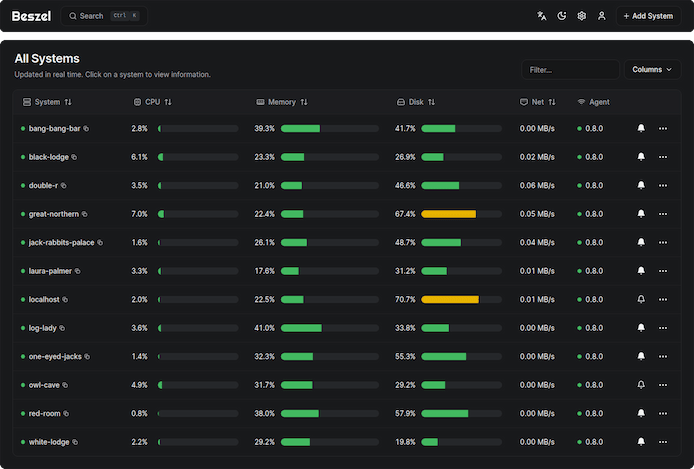
Congratulations—you’ve now got Beszel up and running on your Ubuntu 24.04 machine! With everything installed and configured, you’re all set to leverage its capabilities to streamline your workflow.
Take a moment to explore Beszel’s features and see how it enhances your daily tasks. Whether managing data or optimizing other processes, you’ll soon see the benefits of this robust tool.
Remember, your journey doesn’t end here. Continuously updating and tweaking your configuration as you explore Beszel deeper will ensure you’re always getting the best performance tailored to your needs. Enjoy the empowered Ubuntu experience!